
What Is Semax? Origins of the ACTH-Derived Peptide Developed in Russia
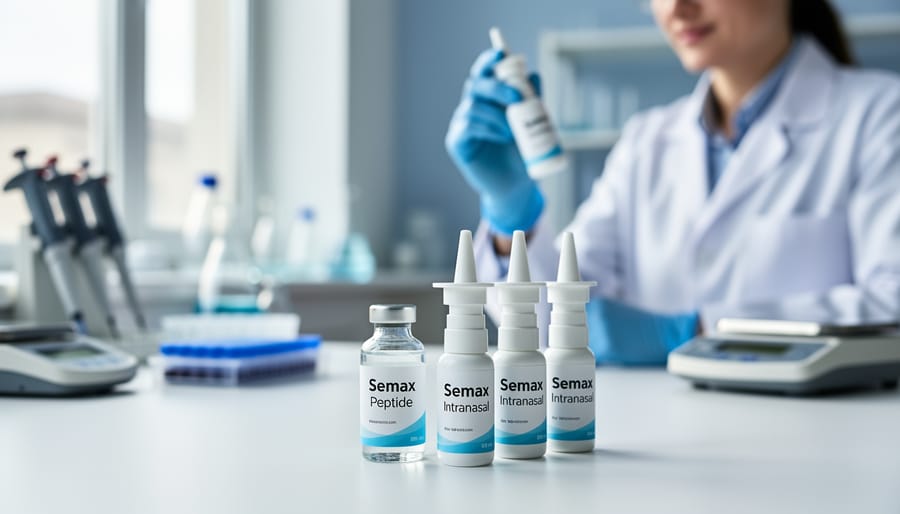
Semax is a synthetic peptide built from a short fragment of ACTH, the adrenocorticotropic hormone your body naturally produces, and it was developed in Russia in the 1980s and 1990s. Researchers at the Institute of Molecular Genetics of the Russian Academy of Sciences created it by taking the piece of ACTH tied to nervous system activity and stripping away the hormone’s effect on the adrenal glands. The goal was a stable, targeted compound for studying how the brain and nerves respond to injury and stress, and researchers sourcing materials can find semax peptide vials sold strictly for laboratory study.
That origin story matters because Semax is one of the few peptides with a long research record rooted in a specific national program. In Russia it has been approved as a prescription medicine for certain neurological uses, while in the United States and much of Europe it hasn’t received the same regulatory approval. Anyone curious about it deserves the facts without hype or medical promises.
Think of it like trusting what comes out of your tap: you want to know where something came from and how it was tested. The same instinct drives interest in UV water filters, and it applies here too. Below, we cover what Semax is, how it came to be, and what’s known about how it works.
What Semax Means: A Plain-Language Definition
Semax is a short chain of amino acids, which makes it a peptide. Specifically, it is a lab-made version of a small fragment of adrenocorticotropic hormone, usually shortened to ACTH. The idea was to keep the fragment’s signaling activity in the nervous system while leaving behind the parent hormone’s effects on the adrenal glands.
That distinction matters. Natural ACTH is released by the pituitary gland and tells the adrenal glands to produce stress hormones like cortisol. A synthetic analog is a deliberately modified copy, built to resemble part of a natural molecule but altered so it behaves differently or lasts longer in the body. Semax is that kind of copy, adjusted so it is more stable than the raw fragment would be.
A few terms are worth having straight before we go further:
- Peptide
- A short chain of amino acids linked together. Peptides are smaller than proteins and often act as chemical messengers in the body.
- ACTH
- Adrenocorticotropic hormone, a natural hormone from the pituitary gland that prompts the adrenal glands to release stress hormones.
- Amino acid
- The basic building block of peptides and proteins. Semax is made from a short sequence of them.
- Analog
- A synthetic compound designed to resemble a natural one while differing in structure, stability, or behavior.
- Neuropeptide
- A peptide that carries signals among nerve cells or influences the nervous system.
Semax’s regulatory status is also worth knowing. In Russia and some neighboring countries, it has been used as a prescription medication for certain neurological purposes. In the United States, it is not approved as a medicine by the FDA, so the information available about it comes largely from outside Western regulatory systems. That gap shapes much of the story we’ll trace next.
The Origins of Semax in Russian Research
Why Scientists Looked to ACTH in the First Place
ACTH, short for adrenocorticotropic hormone, is best known as the signal your pituitary gland sends to tell the adrenal glands to release cortisol. For decades, that stress-response role was the whole story. Then researchers started taking the molecule apart.
By studying shorter fragments of ACTH, scientists in the mid-twentieth century noticed something unexpected. Certain pieces of the chain, especially a region sometimes described as the ACTH(4-10) sequence, did not seem to act on the adrenal glands at all. In animal studies, though, they appeared to influence attention, learning and memory-related behavior. In other words, the fragment seemed to carry a separate signal from the one the full hormone is famous for.
That observation mattered because it suggested the two functions could be pulled apart. A fragment that kept the interesting activity without triggering a hormonal stress response would be a far more targeted tool for researchers to study.
There was a practical problem, however. Natural peptide fragments tend to break down quickly in the body, which makes them hard to study or use. That challenge pushed scientists toward a new goal: designing stable, modified versions that would hold up long enough to be examined properly. It’s worth remembering that these early findings came largely from animal work and should be read as promising research leads, not settled conclusions.
From Soviet-Era Laboratories to Clinical Use
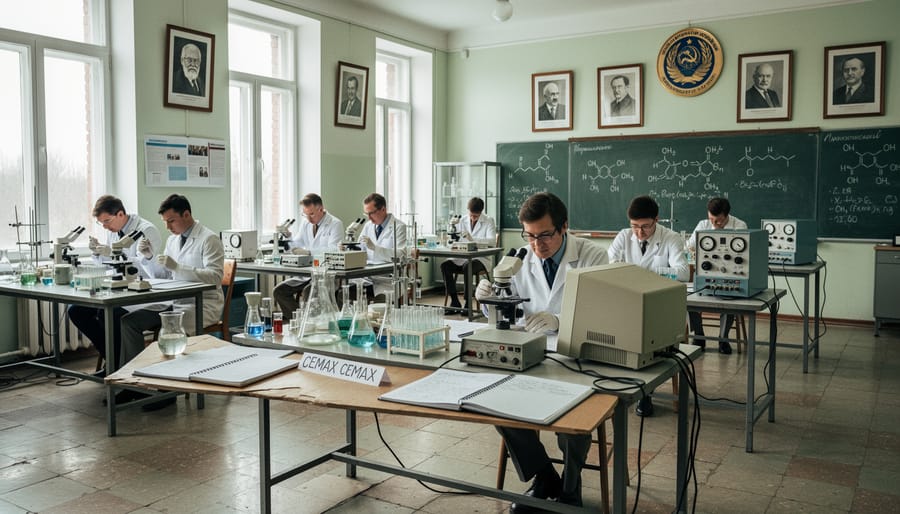
Semax grew out of Soviet-era neuropeptide research, and it is most often credited to scientists at the Institute of Molecular Genetics of the Russian Academy of Sciences in Moscow. The institute was part of the Academy of Sciences of the USSR when this work began, which is why the story starts in the Soviet period and carries on into the Russian one.
The core idea was practical. Natural ACTH fragments break down quickly in the body, so researchers set out to build a sturdier version. The result was a heptapeptide, meaning a chain of seven amino acids. It combines a short ACTH-derived sequence with a small added segment of amino acids, a design choice intended to slow its breakdown and make it more durable than the raw fragment.
From there, the compound moved through preclinical work and clinical studies in Russia. It was eventually registered as a medicine there for certain neurological uses, such as supporting recovery after stroke. Exact approval dates and the full list of authorized indications differ between sources, so it is safest to treat them as something to verify through Russian regulatory records rather than repeat from memory.
One caution matters for readers hunting for evidence. Russian clinical literature on Semax is extensive, but much of it was published in Russian-language journals and is thinly represented in Western trial databases and registries. That makes independent review harder. It does not make the work invalid, but it does mean English-language summaries can be incomplete, and claims should be weighed with that gap in mind.
Why the Story Is Still Told Today
Semax keeps showing up in online wellness conversations partly because of where it came from. It was developed and registered for certain neurological uses in Russia, so most of its clinical literature was published there, often in Russian-language journals. Western doctors and regulators have had little reason to look closely at it, and that gap shapes everything a curious reader finds today.
Nootropic forums and wellness newsletters tend to treat the peptide’s long history abroad as a kind of credential. That’s an understandable instinct, but a decades-old drug isn’t the same as a well-documented one. Many of the studies are small, hard to access, or not easily compared with the large, independently replicated trials that Western regulators expect.
The result is an information landscape with plenty of enthusiasm and thin verification. Sellers and commenters often repeat claims that blur approved use in Russia with experimental use elsewhere. Knowing the origin story helps you ask a better question: what has actually been shown, by whom, and under what rules?
How Semax Works: What Research Suggests

Researchers don’t have one tidy answer for how Semax works. What exists is a set of proposed mechanisms, drawn mostly from animal studies and smaller clinical work published in Russia. Think of them as promising leads rather than settled science.
Here are the main ideas that come up in the research:
- Brain-derived neurotrophic factor (BDNF): studies in animals suggest Semax may raise levels of this protein, which supports the survival and growth of nerve cells, though human evidence is thin.
- Neurotransmitter systems: some work points to effects on serotonin and dopamine signaling, which could help explain the attention and mood-related findings, but results are mostly preclinical.
- Blood-vessel pathways: researchers have looked at whether the peptide influences circulation in the brain, mainly in the context of stroke recovery, with limited data outside Russian studies.
- Inflammatory pathways: animal models hint at changes in immune and inflammatory gene activity, but this remains an early-stage area of investigation.
Notice the pattern: nearly every line comes with a caveat. Much of the supporting evidence comes from rodent experiments or modest clinical studies, and Russian trial literature is not always easy to cross-check against Western databases. Strong claims deserve skepticism, and honest sources say plainly how much is still unknown.
You’ll often see intranasal use mentioned in discussions of Semax. This is simply a description of how it has been studied and used in Russia, not a how-to. The nasal route is usually raised because peptides are fragile. Taken by mouth, they tend to be broken down by digestive enzymes before reaching the bloodstream in meaningful amounts, which is why most peptide-based drugs are delivered another way. The nasal lining offers a possible shortcut, but how efficiently that works in people is still debated.
If you’re curious about any of this beyond general interest, a qualified healthcare professional is the right person to talk to, not a forum thread.
How Semax Is Used and Discussed Today
Semax shows up in a few very different places, and it helps to keep them separate. In Russia, it has been registered as a prescription medication, with documented uses in neurological contexts such as recovery after stroke. In those settings it’s handled like any other drug: a physician prescribes it, and the product comes from a licensed manufacturer.
Outside that framework, the picture shifts. Researchers continue to study peptides like this one, mostly in lab and animal work, with smaller clinical studies on the Russian side. That body of research is genuinely interesting, but much of it hasn’t been replicated in large, independent trials that Western regulators would expect.
Then there’s the online world. Semax is a familiar name in biohacking and nootropic communities, where people trade experiences and opinions about it. Forum posts can be engaging reading, but they’re anecdotes, not evidence. Self-reported results are hard to interpret, and personal enthusiasm tells you very little about safety or effectiveness for anyone else.
The biggest gap is between regulated medical use abroad and unregulated sales elsewhere. In the United States, Semax isn’t approved as a medicine, and products sold online often come with no reliable oversight. Purity, concentration and even the identity of what’s in the vial can be uncertain. That’s a quality problem as much as a legal one.
Think of it like any claim you can’t easily verify. When you’re measuring changes in your own health, you want an instrument you can trust, not a guess. And just as some household jobs are better to call the pros for, questions about a neuroactive peptide belong with a qualified healthcare professional rather than a comment thread.
None of this is meant to alarm anyone. It’s simply a reminder that a name appearing online, even a well-documented one, doesn’t tell you what’s actually in a product or whether it suits your situation.
Common Questions About Semax
Is Semax a hormone or a steroid?
Neither. It is a short synthetic peptide built from a fragment of ACTH, and it is designed to lack the parent hormone’s effects on the adrenal glands.
Is Semax legal in the United States?
It is not approved by the U.S. FDA as a medicine. Its legal status for sale or personal use can be complicated, so check current regulations or ask a qualified professional.
Is Semax the same as ACTH?
No. ACTH is a much longer natural hormone, while Semax is a small, stabilized analog of one piece of it, made to behave differently from the full molecule.
Does Semax have side effects?
Reported effects vary, and the available data comes mostly from Russian studies and smaller trials, so the full picture isn’t well established. A doctor is the right person to discuss any individual safety question.
A couple of other questions come up often. Why Russia? Largely because Soviet-era and later Russian research institutions pursued ACTH fragments in the first place, then carried one of them through to clinical registration at home. Much of that work was published regionally, which is why it can feel hard to find in Western databases.
Where can you find reliable information? Start with peer-reviewed journals, national regulatory agency pages, and reputable medical reference sites rather than forums or sellers’ marketing copy. Be wary of any page that promises dramatic results or skips over the evidence gaps we’ve covered here.
When you’re sorting through a confusing topic like this, it helps to keep it simple: look for the plainest, best-sourced explanation first, and treat anything louder or more certain than the research warrants with healthy skepticism.
Semax is a synthetic peptide built from a fragment of ACTH, developed in Russia over decades of regional research. That history is real and worth knowing, and it explains why the compound turns up in conversations far from the labs where it began.
The picture, though, is a mixed one. The science is genuinely interesting, but much of the supporting evidence comes from Russian studies and animal work that Western researchers have not widely replicated. Approved medical use abroad is also a very different thing from the supplements and “research peptides” sold online elsewhere, where quality and purity are hard to verify.
If curiosity brings you back to this topic, treat it the way you would any bold claim about your health or your home: check the source, look for independent confirmation, and be wary of confident marketing. And if you’re weighing a real decision, a qualified healthcare professional is the right person to ask. Good information, like a good house, is built on solid foundations.
