
Why a 4-in-1 Cordless Vacuum Cleaner Might Be the Only Cleaning Tool You Need
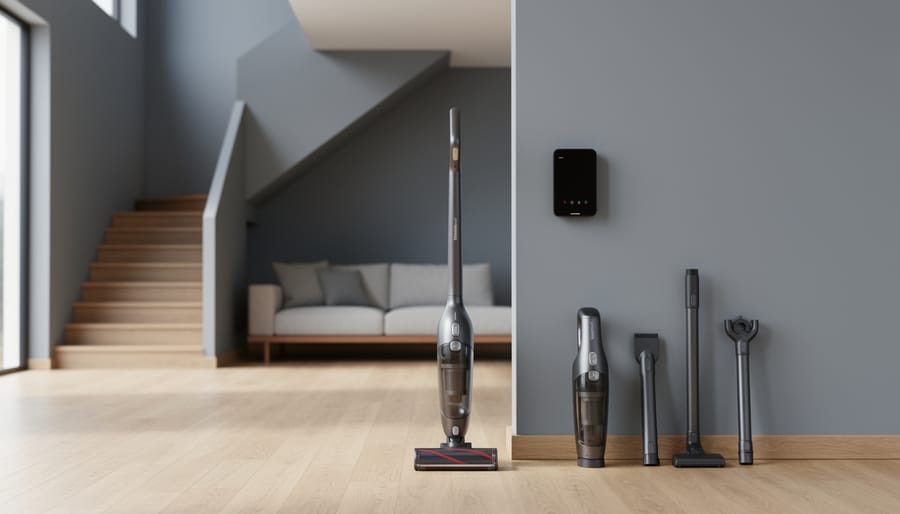
Evaluate whether a 4-in-1 cordless vacuum truly simplifies your cleaning routine or just adds unnecessary complexity by testing each configuration—handheld, stick, upright, and extended reach—against your home’s actual layout and surfaces. Homeowners often discover that while the convertible design sounds appealing, only two or three modes get regular use, making the extra weight and cost questionable for single-level apartments but invaluable for multi-story homes with stairs, upholstery, and hard-to-reach ceiling corners.
Check runtime specifications against your square footage requirements, since multi-function models typically sacrifice battery capacity for lighter weight and versatility. Most quality units deliver 25-40 minutes on standard mode, enough for 1,200-1,500 square feet, but switching between attachments mid-clean can drain power faster than anticipated. Reading through comprehensive cordless vacuum cleaner reviews reveals that models with removable backup batteries provide genuine all-day cleaning capability, while single-battery designs work best for targeted daily maintenance rather than whole-house deep cleans.
Assess attachment storage and transition speed between modes, as the best 4-in-1 systems feature one-click conversions and wall-mounted docks that keep accessories organized and accessible. The difference between a genuinely versatile tool and an awkward compromise often comes down to whether you can switch from vacuuming baseboards to cleaning car interiors in under ten seconds without hunting for scattered pieces. This practical consideration determines whether the multi-function promise becomes daily convenience or remains an underutilized feature gathering dust in your closet.
What Makes a Vacuum 4-in-1?
The term “4-in-1” refers to a vacuum’s ability to transform into four distinct cleaning configurations, each designed to tackle different household tasks. Unlike traditional cordless stick vacuums that serve a single purpose, these convertible models use a modular design philosophy that’s been refined over the past decade to meet the demands of modern, multi-surface homes.
At its core, a 4-in-1 system starts with the stick vacuum configuration—your primary tool for everyday floor cleaning. The motor unit sits at the top, connected to an extension wand that reaches the floor tool below. This setup handles hardwood, tile, and carpet with ease, covering the bulk of your regular cleaning routine.
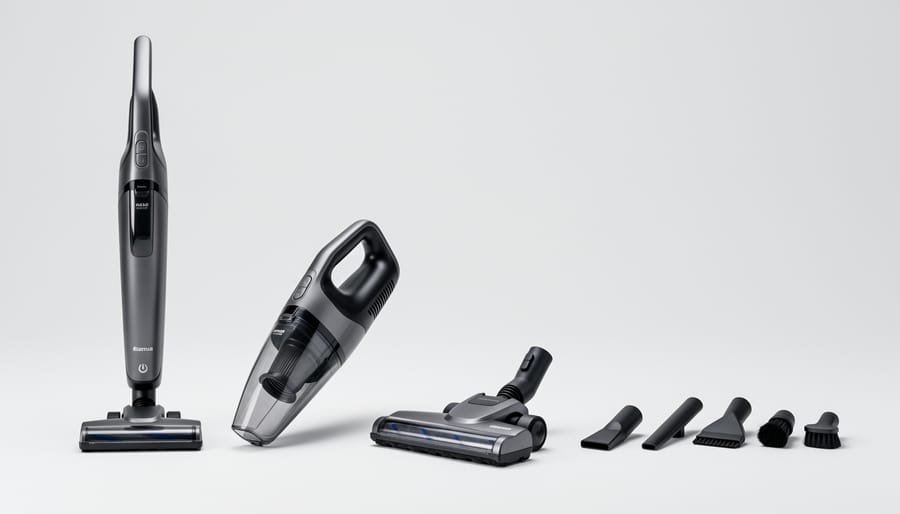
The second configuration emerges when you detach the motor unit from the wand, creating a handheld vacuum. This lighter, more maneuverable form excels at above-floor tasks like cleaning upholstery, car interiors, stairs, and countertops. The transformation typically takes seconds and requires no tools.
The third and fourth configurations involve swapping attachments on either the stick or handheld mode. Most systems include a motorized floor tool with a rotating brush roll for deep carpet cleaning and a standard floor nozzle for hard surfaces. Additional accessories like crevice tools, dusting brushes, and upholstery nozzles clip directly onto the motor unit or wand, expanding your cleaning capabilities to tight spaces, delicate surfaces, and hard-to-reach corners.
This modular approach means you’re essentially getting four specialized cleaning tools in one purchase, all sharing the same battery and motor system. The beauty lies in the simplicity—twist locks, quick-release buttons, and magnetic connections make switching between modes intuitive, even for those who’ve never used convertible vacuum technology. Understanding these configurations helps you evaluate whether a 4-in-1 model truly addresses your home’s specific cleaning challenges.
The Real-World Benefits of Multi-Function Design
Solving the Storage Problem
For decades, vacuum cleaner storage has frustrated apartment dwellers and homeowners with limited square footage. Traditional vacuums demand significant closet real estate, while their various attachments scatter throughout storage areas, creating organizational headaches. The 4-in-1 cordless design fundamentally reimagines this challenge by consolidating multiple cleaning tools into a single, compact unit.
These versatile cleaners typically feature a wall-mounted charging dock that doubles as storage, eliminating the need for dedicated closet space. The transforming design means you’re storing one device rather than a full-size vacuum plus a handheld unit plus a stick vac. This consolidation proves particularly valuable in urban apartments and modern homes where every square foot counts, aligning perfectly with contemporary storage solutions for small spaces that emphasize multi-functionality.
The vertical storage profile of most 4-in-1 models measures just a few inches deep, allowing installation in narrow spaces between furniture or on utility room walls. Integrated attachment storage keeps everything organized in one location, ending the frustrating search for the crevice tool when you need it. This streamlined approach represents a practical evolution in home cleaning equipment, where thoughtful design solves real-world constraints without sacrificing functionality.
From Floor to Ceiling Without Switching Tools
The true test of any multi-function vacuum isn’t what it promises on the box, but how it performs during those everyday cleaning scenarios that demand quick thinking and even quicker tool changes. This is where 4-in-1 cordless designs shine brightest.
Picture yourself tackling a Saturday morning clean. You’re vacuuming the hardwood floors in your living room when you notice stubborn cobwebs clinging to the crown molding near the ten-foot ceiling. With a traditional vacuum, you’d need to put everything away, retrieve a duster or stepladder, then restart your floor cleaning. The 4-in-1 system transforms this frustration into a five-second solution: detach the main body, extend the wand, and reach those high corners without breaking your cleaning rhythm.
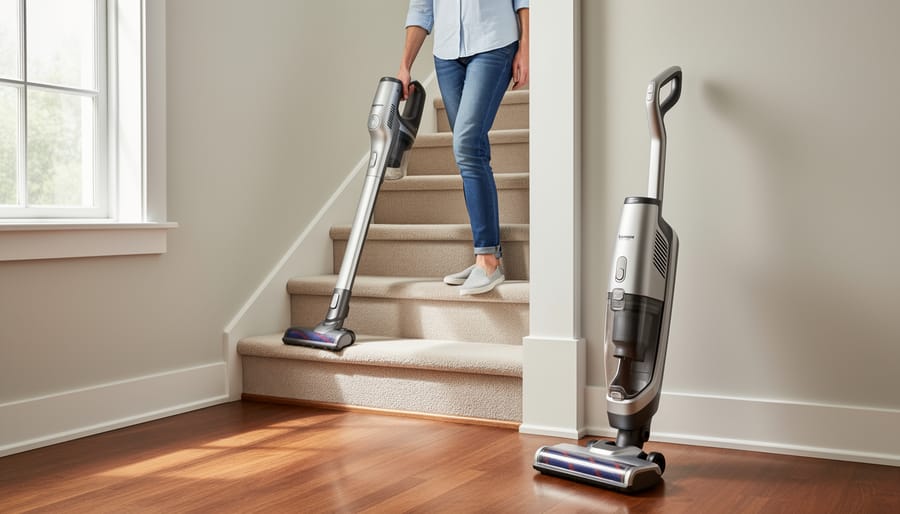
Stairs present another common challenge that historically required multiple tools or awkward maneuvering. The handheld configuration tackles each step efficiently, fitting into corners and edges that upright vacuums simply can’t navigate. You can clean fifteen steps in the time it once took to haul equipment up and down.
The transition from hardwood to upholstery cleaning demonstrates perhaps the most practical advantage. When you finish the floors and spot pet hair on your sofa, there’s no tool-switching delay. Pop off the floor head, attach the upholstery brush, and continue seamlessly. These aren’t dramatic time savings individually, but they accumulate significantly across weekly cleaning routines. More importantly, the reduced friction means you’re more likely to address messes immediately rather than postponing them, keeping your home consistently cleaner with genuinely less effort.
Performance Trade-Offs You Should Know About
Let’s be honest: versatility comes with trade-offs. While 4-in-1 cordless vacuums offer impressive flexibility, they don’t always match the specialized performance of dedicated single-purpose machines. Understanding these compromises helps you make an informed decision about whether this design suits your household needs.
The most significant consideration involves suction power. Because these units balance multiple configurations—upright, handheld, stick, and often a detachable blower—manufacturers sometimes reduce motor wattage to manage weight and battery consumption. You’ll typically see suction power considerations ranging from 120-150 air watts in 4-in-1 models, compared to 180-200+ air watts in dedicated upright vacuums. For everyday dust and debris on hard floors, this difference barely registers. However, if you’re tackling deep-pile carpeting, embedded pet hair, or ground-in dirt regularly, you might notice the gap.
Battery life presents another reality check. Transforming between four functions requires a compact, lightweight battery that won’t make handheld mode exhausting. Most 4-in-1 models deliver 25-40 minutes of runtime on standard settings, which adequately covers most homes under 1,500 square feet. But switch to maximum suction for stubborn messes, and that window shrinks to 12-18 minutes. Larger homes or those with multiple carpeted rooms may require mid-cleaning recharges—something corded models never face. The upside? Battery technology has improved dramatically since the early cordless days of the 2010s, and many modern units charge fully in under three hours.
Weight distribution becomes trickier with multi-configuration designs. When you attach the motorized floor head for upright vacuuming, the weight shifts forward, which can strain your wrist during extended use. Conversely, removing components for handheld mode sometimes leaves an awkwardly balanced tool if the battery sits toward one end. Quality 4-in-1 models address this through thoughtful engineering—positioning batteries centrally and using lightweight materials—but physics remains physics. Users with mobility concerns should test the different configurations before committing.
The dustbin capacity usually runs smaller too, typically 0.4-0.6 liters versus 0.8-1.2 liters in traditional uprights. This compact size enables the handheld transformation but means more frequent emptying during whole-home cleaning sessions.
These aren’t deal-breakers; they’re simply realities of the multi-function approach. For apartments, smaller homes, or households prioritizing storage efficiency and quick cleanups over marathon deep-cleaning sessions, the trade-offs prove entirely worthwhile.
Key Features That Separate Good from Great
Battery Life and Charging Reality
Let’s talk about what those runtime numbers on the box really mean for your daily cleaning routine. Manufacturers typically advertise maximum battery life—often 40 to 60 minutes—but here’s the catch: that’s almost always on the lowest power setting with no attachments running. In practical terms, expect closer to 15-25 minutes when using motorized brush heads on medium to high power, which is what most of us actually need for effective cleaning.
The 4-in-1 design adds another layer to consider. If you’re using the handheld mode for quick spot cleaning, you’ll stretch your battery further than when tackling entire floors in stick mode. Smart shoppers should match runtime to home size: apartments under 1,000 square feet work fine with 20-minute practical runtime, while larger homes might require strategic cleaning sessions or a second battery.
Multi-speed modes aren’t just marketing fluff—they’re your secret weapon for battery management. Reserve turbo mode for high-pile rugs and stubborn messes, cruise on medium for everyday floors, and drop to eco mode for hard surfaces and final touch-ups. This approach can nearly double your effective cleaning time.
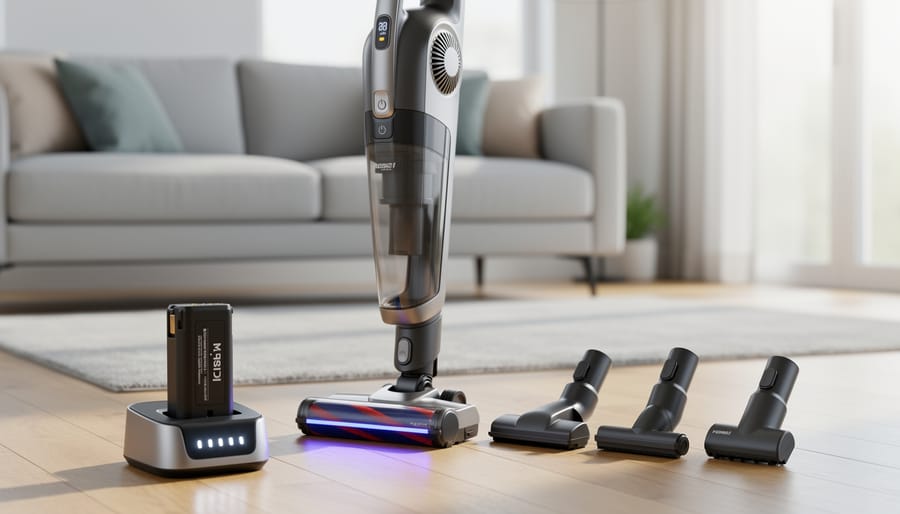
Charging times matter too. Most quality models fully recharge in 3-4 hours, though some budget options stretch to 6 hours. Wall-mounted charging docks earn their keep here, keeping your vacuum ready between uses. The historical lesson from early cordless models still holds: a vacuum that lives on its charger lasts longer and performs better than one tucked away uncharged in a closet.
Filtration Systems That Actually Matter
Not all 4-in-1 cordless vacuums offer the same air quality protection, and if you’re dealing with allergies or pet dander, filtration becomes more than a checkbox feature. HEPA filters trap 99.97% of particles as small as 0.3 microns, meeting HEPA filter standards that actually make a difference for respiratory health. Look for true HEPA certification rather than “HEPA-style” marketing language, which lacks the same effectiveness.
For households with pets or allergy sufferers, advanced filtration prevents allergens from recirculating back into your home during cleaning. The trade-off? These filters require regular maintenance—typically washing every month and replacement every six to twelve months depending on usage. While basic filtration works fine for general tidying, families managing asthma, seasonal allergies, or multiple pets should prioritize models with genuine HEPA systems and accessible filter compartments. Check whether replacement filters are readily available and reasonably priced, as ongoing costs add up over your vacuum’s lifespan.
Attachment Quality and Ease of Switching
The true test of a 4-in-1 system isn’t just having multiple attachments, but whether switching between them becomes second nature or a frustrating chore. Look for click-lock mechanisms that engage firmly with an audible snap yet release with a simple button press. Cheaper models often feature flimsy twist-locks that loosen over time, causing attachments to wobble during use.
Storage solutions matter more than most manufacturers admit. The best designs include onboard docking stations or wall mounts with dedicated slots for each attachment, keeping everything accessible rather than buried in a closet. Without thoughtful storage, you’ll likely default to just one configuration, defeating the purpose of versatility.
Consider your realistic usage patterns. Most homeowners find themselves relying on two configurations regularly—typically the stick vacuum for daily floor cleaning and the handheld for quick spot cleaning. The crevice tool and upholstery brush, while useful, often see occasional duty. This isn’t necessarily a drawback; even moderate use of additional attachments justifies the investment over purchasing separate devices. The key is ensuring those transitions happen smoothly enough that you’ll actually reach for the right tool when needed, rather than making do with whatever’s already attached.
Who Should Choose a 4-in-1 (And Who Shouldn’t)
A 4-in-1 cordless vacuum cleaner shines brightest in certain living situations while falling short in others. Understanding where you fit helps avoid buyer’s remorse and ensures your investment truly simplifies your cleaning routine.
These versatile machines excel in apartments and townhomes under 1,500 square feet. The cordless convenience matters most when you’re navigating multiple rooms without constantly switching outlets, and the runtime typically handles these spaces comfortably on a single charge. Multi-level homes also benefit tremendously—carrying a lightweight stick vacuum upstairs beats lugging a traditional canister any day. The handheld conversion makes quick work of carpeted stairs, a notoriously awkward cleaning challenge that historically required specialized attachments or separate tools.
Pet owners in smaller households often find 4-in-1 models perfectly adequate. The motorized brush roll handles everyday shedding on hard floors and low-pile carpets, while the handheld mode quickly tackles fur on furniture and car interiors. Busy professionals appreciate the grab-and-go functionality for daily maintenance cleaning between deeper weekend sessions.
However, certain situations demand more specialized equipment. Homes exceeding 2,000 square feet may find the battery life frustrating, requiring mid-cleaning recharges that disrupt workflow. Those with predominantly high-pile carpeting or multiple large area rugs often discover that 4-in-1 models lack the sustained suction power and brush depth needed for thorough soil extraction—a corded upright with stronger motors simply works better.
Households with severe allergies should carefully evaluate filtration systems, as some budget 4-in-1 models compromise on sealed systems and HEPA standards compared to dedicated vacuum cleaners designed with allergen control as priority. Similarly, homes with heavy pet hair from multiple animals or large dogs may overwhelm the smaller dustbin capacity and brush rolls, requiring frustratingly frequent maintenance.
If you regularly tackle workshop debris, construction dust, or wet spills, a dedicated shop vacuum remains irreplaceable. The 4-in-1’s versatility doesn’t extend to these extreme conditions without risking damage.
Ultimately, 4-in-1 cordless vacuums serve maintenance-focused households beautifully—those prioritizing convenience and quick cleanups over deep-cleaning marathons. They represent modern efficiency for contemporary living spaces, blending the historical principle of “right tool for the job” with today’s preference for minimalist, multi-functional solutions. Assess your square footage, flooring types, and cleaning frequency honestly before committing.
Maintaining Your Investment for Long-Term Performance
Your 4-in-1 cordless vacuum represents a meaningful investment in your home’s cleanliness, and like any quality appliance, it rewards consistent care with years of reliable performance. Drawing from decades of appliance expertise, we’ve found that a simple monthly routine makes all the difference between a vacuum that fades after a year and one that maintains strong suction for five years or more.
The beauty of modern cordless vacuums lies in their simplicity, but three areas demand your attention: filters, batteries, and brush rolls. Neglect these, and you’ll notice declining performance surprisingly quickly. Stay on top of them, and your investment pays dividends.
Here’s a monthly maintenance routine that takes less than 10 minutes:
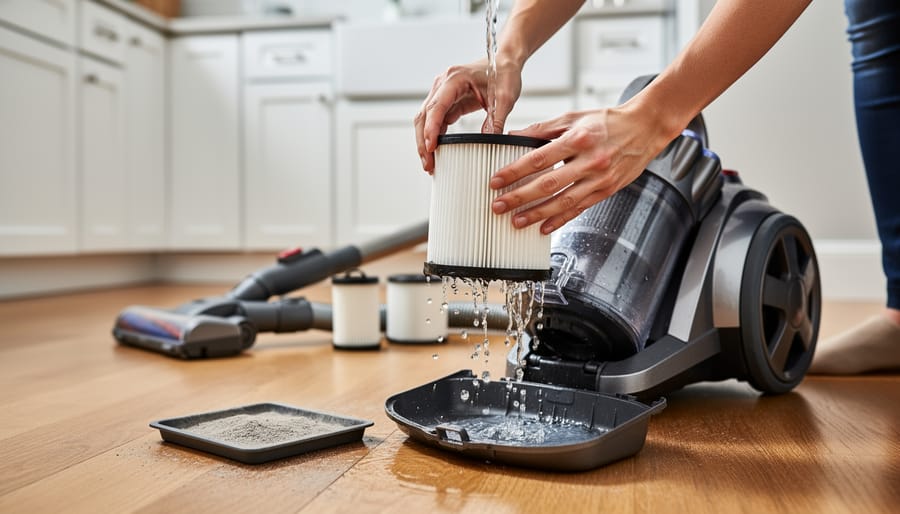
- Remove and tap out the pre-motor filter over a trash bin to dislodge trapped dust and debris.
- Rinse the washable filter under cool water until the water runs clear, then air-dry completely for 24 hours before reinstalling.
- Check the brush roll for tangled hair or threads, cutting away any wrapped fibers with scissors.
- Wipe down the exterior and empty the dustbin, even if it appears only partially full.
- Inspect battery contacts for dust buildup and clean gently with a dry cloth.
Between monthly deep cleans, empty the dustbin after each use and give filters a quick tap-out weekly if you’re vacuuming daily.
Proper battery care extends your vacuum’s working life significantly. Avoid completely draining the battery before recharging, and store your vacuum in moderate temperatures—extreme heat or cold degrades lithium-ion cells faster than regular use. If you notice reduced runtime, it’s often a clogged filter restricting airflow rather than battery failure, so troubleshoot filters first before assuming the worst.
So, do 4-in-1 cordless vacuum cleaners truly deliver on their versatility promise? For many homeowners, the answer is a resounding yes—provided you choose thoughtfully and match the features to your actual cleaning habits. These multi-function machines excel when your home demands quick transitions between floor types, furniture crevices, and overhead tasks. The space-saving design and convenience factor make them particularly valuable for smaller living spaces or anyone juggling daily maintenance across multiple surfaces.
That said, they’re not universally ideal. If you primarily clean expansive carpeted areas or need extended runtime for whole-house sessions, a traditional upright might still reign supreme. The key is honest assessment: evaluate your square footage, surface variety, storage constraints, and whether you’ll genuinely use all four configurations regularly.
Throughout decades of observing appliance evolution, one truth remains constant—the best tool is the one that fits your lifestyle, not just the most feature-packed option. We’re here to help you cut through marketing claims and make decisions grounded in real-world performance. Consider your specific cleaning challenges, weigh the trade-offs we’ve discussed, and you’ll find the right match for your home.
