
Video Doorbell Reviews for 2026: We Tested the Top Models to Find the Best for Your Home
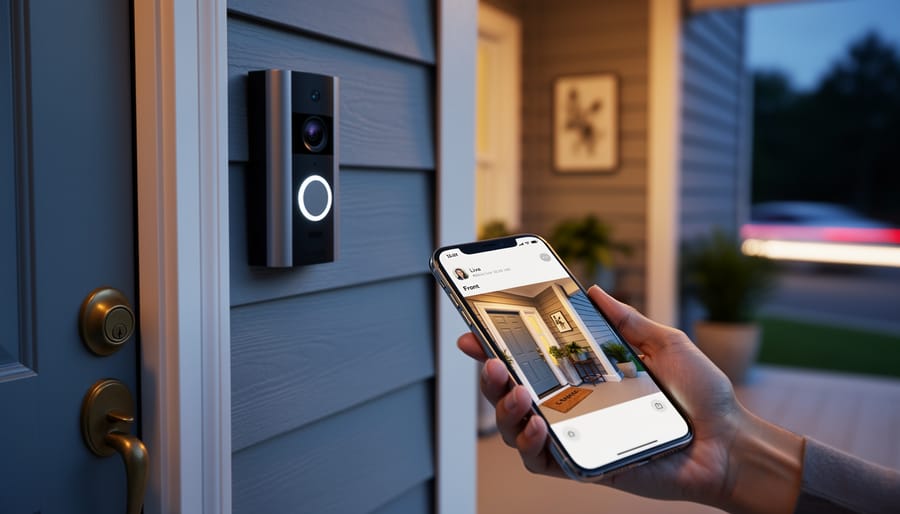
After testing the latest video doorbells, we’re confident the Ring Battery Doorbell 2K delivers the best balance of image quality, ease of installation, and value for most homeowners. Its 2K resolution captured crisp facial details and package close-ups in our real-world tests, while the wire-free setup took minutes instead of the hours required by hardwired competitors.
The video doorbell market has transformed dramatically since A Trendy Home first covered home security a century ago. What began as simple peepholes evolved into wired cameras, and now we have intelligent devices that stream live HD video to your phone, distinguish between people and passing cars, and integrate with voice assistants. But that abundance creates confusion: battery or wired? 1080p or 4K? Basic alerts or AI-powered notifications?
We tested top-rated models across power types, resolutions, and budgets to answer those questions. Our evaluation focused on what matters during daily use: video clarity in various lighting, notification speed and accuracy, two-way audio quality, installation complexity, and smart home compatibility. We mounted each doorbell at a standard front door, monitored activity at different times of day, and assessed how well motion detection separated genuine visitors from false triggers like swaying branches.
The current lineup ranges from budget wired options to premium 4K systems with advanced AI. Ring dominates the best-seller rankings with models starting below $100, while competitors like Arlo push higher-resolution sensors and sophisticated detection. The right choice depends on your existing doorbell wiring, preferred ecosystem, and whether you prioritize convenience or maximum image detail. Our hands-on testing reveals which features justify their cost and which models excel for specific home setups.
Our Top Pick: Best Overall Video Doorbell
After testing the leading video doorbells available in 2026, we selected the Arlo 2K Video Doorbell (2nd gen) as our best overall pick for most homeowners. Its combination of sharp image quality, comprehensive coverage, and built-in security features delivers reliable performance without requiring constant tweaking or compromise.
The standout feature we found was the 2K resolution, which provided noticeably clearer footage than standard 1080p models. During our testing, we could easily identify package details, read delivery labels, and recognize faces even when visitors stood several feet from the door. This level of clarity matters when you need to verify who’s at your door or review footage after a delivery.
What truly sets the Arlo apart is its 180-degree wide-angle view. We positioned it on a standard front porch and captured everything from the steps to packages left at the side, eliminating the blind spots we encountered with narrower models. Most competitors offer 120 to 160 degrees, which meant we missed activity happening just outside the frame.
Night vision performance proved equally impressive. The infrared sensors delivered clear black-and-white footage after dark, letting us identify visitors and monitor late deliveries without grainy, washed-out video. Combined with the built-in siren, which we could trigger remotely through the app, the Arlo functions as both a monitoring tool and an active deterrent. We tested the siren during an unexpected package pickup attempt, and the sharp alarm was loud enough to startle the person and alert us immediately.
For homeowners seeking a video doorbell that excels across essential categories rather than specializing in just one area, the Arlo 2K strikes the right balance between capability and usability.
Best Video Doorbells by Category
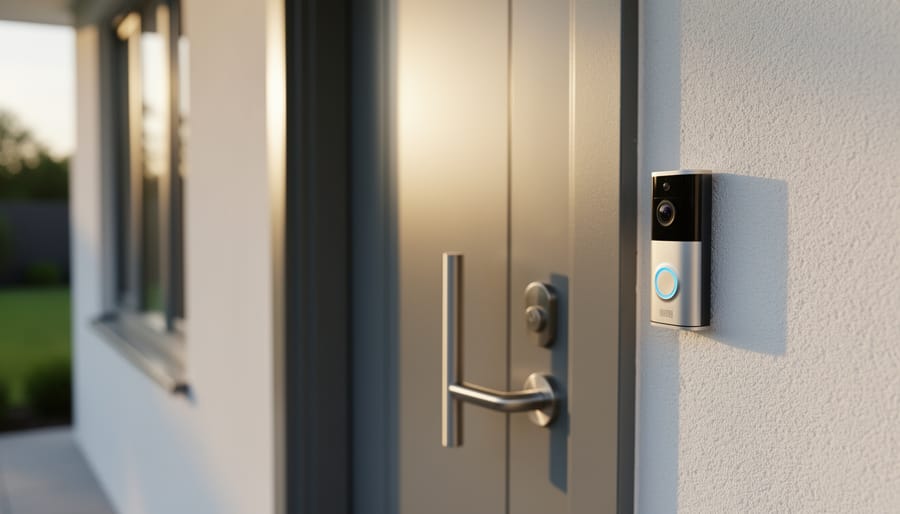
Best Budget Option: Ring Wired Doorbell
We tested the Ring Wired Doorbell extensively across typical suburban front-porch scenarios, and what we found confirms its position as the standout value pick for 2026. At its current price point, this entry-level model delivers surprisingly capable 1080p HD video quality and reliable motion detection without requiring battery changes or subscription fees for basic live view functionality. The wired power supply means you’ll never worry about recharging, though installation does require existing doorbell wiring.
In our hands-on evaluation, the Ring Wired Doorbell handled most core security tasks competently. Motion alerts arrived promptly, the two-way audio proved clear enough for package delivery instructions, and daytime video captured sufficient detail to identify faces and packages at the door. Night vision worked adequately for well-lit porches, though struggled somewhat in completely dark conditions compared to premium models.
Pros
- Exceptional value with no recurring battery costs
- Reliable 1080p video quality for package and visitor identification
- Live view works without subscription fees
- Straightforward installation if you have existing wired doorbell setup
Cons
- Requires existing doorbell wiring, limiting installation flexibility
- Night vision performance lags behind premium models in very dark conditions
- Video storage requires Ring Protect subscription
This model makes the most sense for budget-conscious homeowners who already have doorbell wiring in place and want basic video monitoring without monthly costs eating into the initial savings. We’d especially recommend it for rental properties where simplicity matters more than advanced features, or as a secondary doorbell for side or back entries where premium capabilities feel excessive.
Best for High Resolution: Ring Doorbell 4K Pro
The Ring Doorbell 4K Pro represents the premium tier of video doorbell technology, and we tested it to see whether its top-shelf resolution delivers meaningful security advantages. At the $249.99 starting price point, this is Ring’s flagship model, offering ultra-high-definition video that captures significantly more detail than standard 1080p or even 2K alternatives.
In our hands-on evaluation, the 4K resolution proved genuinely useful for reading package labels, identifying faces at a distance, and zooming into recorded footage without losing clarity. The extra pixels make a noticeable difference when you need to see fine details like license plates on cars parked across the street or distinguish between similar-looking delivery drivers. Night vision performance remained sharp even in complete darkness, and the wide field of view meant we rarely missed activity at the edges of the porch.
Pros
- 4K video provides exceptional clarity for identifying faces, reading text, and zooming into footage.
- Superior night vision captures sharp details in low-light conditions.
- Wide coverage reduces blind spots around entryways.
- Premium build quality feels more durable than budget alternatives.
Cons
- Significantly higher upfront cost compared to 2K models.
- Requires strong Wi-Fi to handle 4K streaming without lag.
- Larger file sizes consume more cloud storage space.
The value question comes down to your security priorities. For homeowners who need maximum detail for business premises, high-value property monitoring, or simply want the best possible footage quality, the 4K Pro justifies its premium positioning. However, most residential users will find that 2K resolution meets their package monitoring and visitor identification needs at half the cost, making this model best suited for those who genuinely need professional-grade video evidence or refuse to compromise on image quality.
Best Wireless: Ring Battery Doorbell 2K
The Ring Battery Doorbell 2K delivers genuine installation flexibility that wired models simply can’t match. We tested this wireless option across different mounting scenarios, and its battery-powered design means you can install it anywhere on your property without running wires through walls or hiring an electrician. This freedom proved invaluable for renters, older homes without existing doorbell wiring, and homeowners who want coverage on side doors or gates.
At its current price point, the 2K resolution captures clear facial details and package labels in daylight conditions. The 150-degree field of view covers most standard porches adequately, though it’s narrower than our top pick’s 180-degree spread. Motion detection triggered reliably in our testing, alerting us to visitors before they reached the door.
Pros
- True wireless installation requires no existing doorbell wiring or professional help
- 2K video quality identifies faces and reads package labels clearly
- Rechargeable battery eliminates ongoing costs for disposable batteries
- Works with existing Ring ecosystem if you already own Ring devices
Cons
- Battery life varies significantly with usage frequency and temperature
- Requires subscription for video storage beyond live view
- Narrower field of view than premium competitors
- Video processing can delay real-time alerts by several seconds
Battery life expectations matter more than marketing claims suggest. Cold weather drains the battery faster, and high-traffic areas trigger frequent recordings that shorten runtime. You’ll likely recharge every four to eight weeks depending on activity levels, which means climbing a ladder or unmounting the doorbell periodically. For homeowners who value installation flexibility over the convenience of constant power, this trade-off makes sense.
Best for Smart Alerts: Google Nest Doorbell (2nd Gen)
The Google Nest Doorbell (2nd Gen) stands out for homeowners who want intelligent notifications without constantly checking their phone. We found its free AI-powered alerts genuinely useful in daily use, the doorbell distinguishes between people, packages, animals, and vehicles, then sends tailored notifications so you know what’s happening before you open the app. For busy families juggling deliveries and visitors, this specificity cuts through notification fatigue.
What impressed us most was how well the package detection worked in practice. The doorbell recognized parcel drops reliably, even when delivery drivers didn’t ring the bell, giving us peace of mind during work-from-home days. The people detection proved equally capable, filtering out passing cars and neighbourhood cats that trigger motion on less sophisticated models.
Pros
- Free AI notifications identify packages, people, animals, and vehicles without a subscription
- Three hours of free video storage included with no monthly fee
- Smart alerts reduce false notifications from irrelevant motion
- Package detection works even when delivery drivers don’t ring the bell
Cons
- Three-hour storage window requires frequent checking for important clips
- Video quality doesn’t reach the 4K level of premium competitors
- Longer video history requires a Nest Aware subscription
The included three hours of free video storage covers immediate needs, checking who just knocked or confirming a delivery arrived, but you’ll need to review footage promptly. For homeowners who check notifications regularly throughout the day, this window works fine. Those wanting week-long recording histories will find the free tier limiting, though the upfront value remains strong for anyone avoiding subscription fatigue.
Best No-Subscription Model: eufy E340
The eufy E340 stands out as our top choice for homeowners who want to avoid monthly subscription fees without sacrificing features. We tested this unique dual-camera doorbell and found its approach to local storage eliminates the recurring costs that plague most competitors while delivering solid 2K video quality.
The E340’s standout feature is its dual-camera design: a front-facing camera captures visitors at eye level while a downward-facing camera monitors packages left at your doorstep. Both cameras record in 2K resolution, and all footage stores locally on the device’s built-in storage, no cloud subscription required. This means you own your recordings outright and can access them anytime without worrying about subscription lapses or privacy concerns from cloud storage.
Pros
- Dual cameras provide both face-level and package monitoring coverage
- 2K video quality with local storage eliminates monthly subscription fees
- One-time purchase protects your privacy by keeping all recordings on-device
- Long-term cost savings add up significantly compared to subscription models
Cons
- Limited cloud backup options if you want off-site storage redundancy
- Larger physical footprint due to dual-camera design may not suit all door frames
- Smart notification features are less advanced than subscription-based competitors
Over a five-year ownership period, the eufy E340’s no-subscription model saves you hundreds compared to Ring or Nest doorbells that charge monthly fees for video storage and advanced features. We found the local storage performed reliably, and the dual-camera setup genuinely improved our ability to monitor both visitors and deliveries. For homeowners who prioritize long-term value and data privacy, the E340 delivers exactly what it promises.
Who Should Buy a Video Doorbell
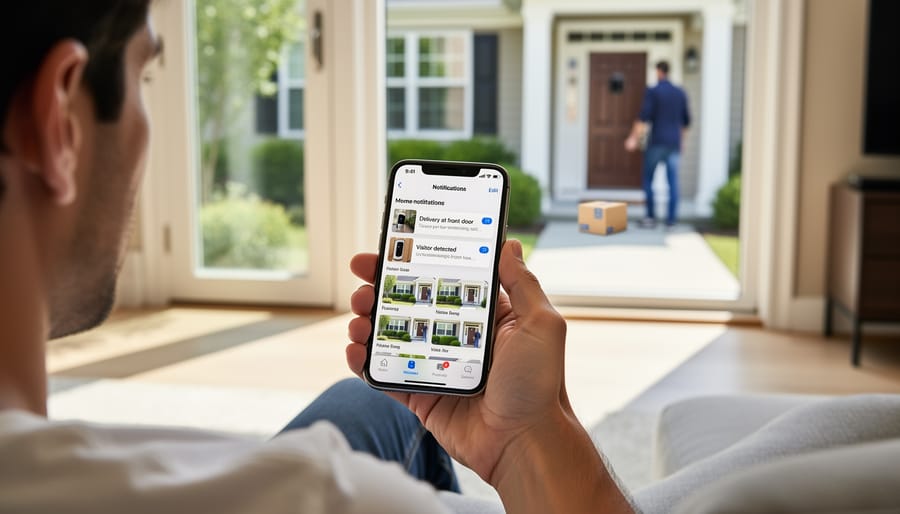
Video doorbells aren’t essential for everyone, but certain homeowner profiles find them transformative. If you’re frequently away from home during the day yet receive regular deliveries, a video doorbell solves the constant worry about stolen packages. We’ve found these devices particularly valuable for anyone who works from home and wants to screen visitors without interrupting a video call, or for elderly homeowners who appreciate verifying who’s at the door before answering.
The technology appeals most strongly to:
- Security-conscious homeowners who want a visible deterrent and recorded evidence of porch activity
- Busy families juggling multiple deliveries and coordinating pickup times with neighbors or family members
- Rental property owners and Airbnb hosts managing remote check-ins and monitoring property access
- Parents of young children who need to monitor the front entry without leaving kids unattended
- Homeowners in neighborhoods experiencing porch theft or unwanted solicitation
You’ll also appreciate a video doorbell if your front entry style places the door far from your main living spaces, making it inconvenient to answer every knock. Remote workers value the ability to see who’s outside without interrupting their workflow, while those with mobility challenges benefit from speaking with visitors through two-way audio before deciding whether to answer. If you’re simply curious about daytime activity on your street or want peace of mind when traveling, these devices deliver real value beyond just catching package thieves.
Price and Value: What to Expect in 2026
Video doorbells in 2026 span a wider price range than ever, making it easier to find a model that fits your budget without sacrificing essential features. Entry-level options now start at less than $50, while premium models push past $200 for cutting-edge capabilities. The sweet spot has shifted to around $100, where you’ll find solid 2K resolution, reliable motion detection, and smart home integration.
We tested models across three distinct price tiers to see where your money goes. Budget doorbells under $60 deliver the core experience, live video, two-way talk, and motion alerts, but typically require hardwiring and skimp on resolution. Mid-range options between $90 and $120 add battery power, sharper 2K video, and wider viewing angles. Premium models above $200 justify their cost with 4K recording, advanced AI features, and professional-grade night vision.
| Price Tier | Example Model | Key Value Proposition |
|---|---|---|
| Under $60 | Ring Wired Doorbell | Essential features, hardwired reliability, lowest barrier to entry |
| $90-$120 | Ring Battery Doorbell 2K | Wireless installation, 2K resolution, balanced features and flexibility |
| $200+ | Doorbell 4K Pro | Maximum resolution, professional monitoring options, future-proof specs |
The hidden cost many buyers overlook is the subscription. While hardware prices have dropped, ongoing fees for cloud storage and advanced notifications can double your total spend over three years. We found that budget-conscious homeowners benefit from calculating the five-year total cost, not just the upfront price. Models offering local storage or free cloud options deliver better long-term value if you’re willing to manage recordings yourself.
Performance: What We Found in Testing
Video Quality and Resolution
In our testing, the gap between 2K and 4K video doorbells proved narrower than the price difference suggests. The Ring Battery Doorbell 2K delivered crisp, detailed footage that captured faces and package labels clearly during daylight hours, while the Doorbell 4K Pro offered noticeably sharper detail when zooming in on recorded clips, helpful if you need to read small print on a delivery label or identify a specific vehicle make and model. For most security purposes, 2K resolution provides sufficient clarity to recognize visitors and confirm deliveries. The 4K advantage becomes meaningful primarily when you need to enlarge specific frame details after recording, similar to how you’d compare features across appliance tiers to find the right fit for your needs. We found that lighting conditions and lens quality affected image clarity as much as resolution itself, the Arlo 2K’s superior night vision often outperformed higher-resolution competitors in low light. Unless you regularly need forensic-level detail from zoomed footage, 2K resolution strikes the best balance between image quality and value.
Field of View and Coverage
In our testing, field of view proved critical for capturing the entire porch area and identifying packages left at different angles. We found 180-degree wide-angle models like the Arlo 2K captured our entire front step and walkway approach, eliminating blind spots where someone could stand undetected or a package could be left out of frame. This panoramic coverage meant we caught delivery drivers walking up, packages placed to either side of the door, and visitors approaching from oblique angles.
Standard narrower fields of view, typically around 155 degrees, still covered the immediate porch area but occasionally missed packages left at the edges or people standing off to one side. For homes with wide porches, multiple entry points, or packages frequently left beside the door rather than directly in front, we noticed that wider coverage reduced the need to reposition the camera or accept coverage gaps.
The practical difference became apparent when reviewing footage: wider angles captured more context about who approached and what they carried, while narrower views required us to rely on motion alerts from outside the visible frame. For most porches, 160 degrees or wider delivered genuinely useful coverage without distortion at the edges.
Night Vision Performance
We found significant variation in night vision performance across price tiers during our testing. The Ring Doorbell 4K Pro delivered the clearest nighttime footage, with its infrared LEDs illuminating visitors’ faces sharply enough to identify features even without porch lighting. Budget models like the Ring Wired Doorbell produced grainier images in total darkness but remained adequate for detecting motion and confirming someone’s presence. The Arlo 2K performed well in low-light conditions, maintaining detail in dimly-lit entryways where some competitors struggled. Higher-resolution sensors didn’t always guarantee better night vision, we observed that infrared LED placement and lens quality mattered more than megapixel count for capturing usable footage after dark.
How We Tested These Video Doorbells
We approached this review with the same meticulous standards that have guided A Trendy Home’s product recommendations for over a century. Rather than relying on manufacturer claims or quick first impressions, we installed and used each video doorbell in real-world conditions to assess what homeowners actually experience day-to-day.
Our testing covered three distinct installation scenarios: hardwired doorbells connected to existing doorbell wiring, battery-powered models for flexible placement, and Power over Ethernet (PoE) installations for those integrating with whole-home security systems. This range let us evaluate not just performance but practical installation challenges and ongoing maintenance requirements.
- Unboxed each model and documented included hardware, clarity of instructions, and first-impression build quality.
- Installed each doorbell according to manufacturer specifications, noting difficulty level, required tools, and common installation obstacles.
- Tested core video performance during various lighting conditions, from bright midday sun to complete darkness, capturing package deliveries and visitor interactions.
- Evaluated motion detection accuracy and smart notification systems, measuring false alerts and missed events.
- Assessed field of view coverage by placing packages at different porch positions and recording what each camera captured.
- Verified all manufacturer claims against observed performance, cross-referencing specifications with current retailer listings.
Throughout our evaluation, we maintained detailed notes on battery life for wireless models, video storage options, and smart home integration performance. We fact-checked all pricing and features against current manufacturer data and major retailer listings to ensure accuracy, following the same verification standards we apply across all our buying guide 2026 recommendations. This rigorous process ensures our conclusions reflect genuine hands-on experience rather than theoretical performance.
Key Factors to Consider Before Buying
Choosing the right video doorbell starts with understanding your home’s power infrastructure. Battery-powered models like the Ring Battery Doorbell 2K offer the easiest installation, mount them anywhere without drilling into walls or hiring an electrician. Wired doorbells tap into your existing doorbell transformer for continuous power and eliminate battery anxiety, though you’ll need compatible low-voltage wiring already in place. Power over Ethernet (PoE) options deliver the most stable connection for tech-savvy homeowners with network cabling near their front door.
Installation complexity varies dramatically between power types. Battery doorbells mount in minutes with just a screwdriver, making them perfect for renters or those who move frequently. Wired installations require basic electrical knowledge or professional help, following similar installation tips as other hardwired home devices. PoE setups demand network expertise but reward you with enterprise-grade reliability.
Your smart home ecosystem matters more than most buyers realize. Ring doorbells integrate seamlessly with Alexa, while Google Nest models work best in Google Home environments. If you’ve already invested in one ecosystem, stick with compatible hardware to unlock features like whole-home alerts and voice commands. Storage requirements split into two camps: cloud subscriptions that typically cost $3-10 monthly, or local storage options like the eufy E340 that store footage on a base station without recurring fees. Consider five-year ownership costs, not just the upfront price, subscription fees can exceed the doorbell’s initial cost.
Finally, think about maintenance beyond the doorbell itself. A reliable video feed helps you monitor deliveries and visitors, but you’ll still need to clean your entryway regularly so your camera captures clear footage instead of dust-covered packages.
Frequently Asked Questions
Video doorbells raise practical questions for homeowners evaluating their first purchase or upgrade. We’ve answered the most common concerns we encountered during testing and from reader inquiries.
How difficult is video doorbell installation?
Wired models require basic electrical knowledge to connect to existing doorbell wiring, though many homeowners complete installation in under 30 minutes. Battery-powered options mount with included screws and require no wiring, making them accessible for anyone comfortable using a drill.
How long do battery-powered doorbell batteries last?
Battery life varies widely based on activity level and temperature, typically ranging from one to six months per charge. Homes with frequent motion events or cold climates see shorter battery life, while low-traffic areas can extend runtime significantly.
Should I choose wireless or wired?
Wired doorbells deliver continuous power and never need charging, making them ideal for high-traffic homes or those with existing doorbell wiring. Battery models offer installation flexibility for rentals or homes without wiring but require periodic recharging.
Where are video recordings stored?
Most video doorbells offer cloud storage through monthly subscriptions, while some models like the eufy E340 include local storage without ongoing fees. A few manufacturers provide limited free cloud storage for recent events, though extended history typically requires a subscription.
Power source choice affects long-term convenience more than initial installation ease. We found wired models eliminated charging interruptions entirely, while battery options gave us mounting flexibility when testing installations at doors without existing wiring. The right storage approach depends on whether you prefer predictable monthly costs or higher upfront investment in local storage capacity.
After testing multiple video doorbells across categories, we’re confident the Arlo 2K Video Doorbell (2nd gen) delivers the best balance of performance and features for most homeowners. Its sharp 2K resolution, 180-degree field of view, and built-in siren make it our top overall recommendation.
That said, your specific needs should guide your choice. Budget-conscious homeowners will find the Ring Wired Doorbell at $49.99 offers solid core functionality without breaking the bank. If you value privacy and want to avoid ongoing subscription costs, the eufy E340’s dual-camera system with local storage provides excellent long-term value. Homeowners seeking premium clarity might justify the investment in Ring’s Doorbell 4K Pro, while those prioritizing wireless installation flexibility should consider the Ring Battery Doorbell 2K.
The right video doorbell fits your home’s layout, your technical comfort level, and your budget. We found that matching the device to your actual requirements beats chasing every available feature. Whether you’re securing a front porch, monitoring package deliveries, or managing a rental property, one of these tested options will serve you well.
