
How to Choose a Clothes Steamer: A Buying Guide
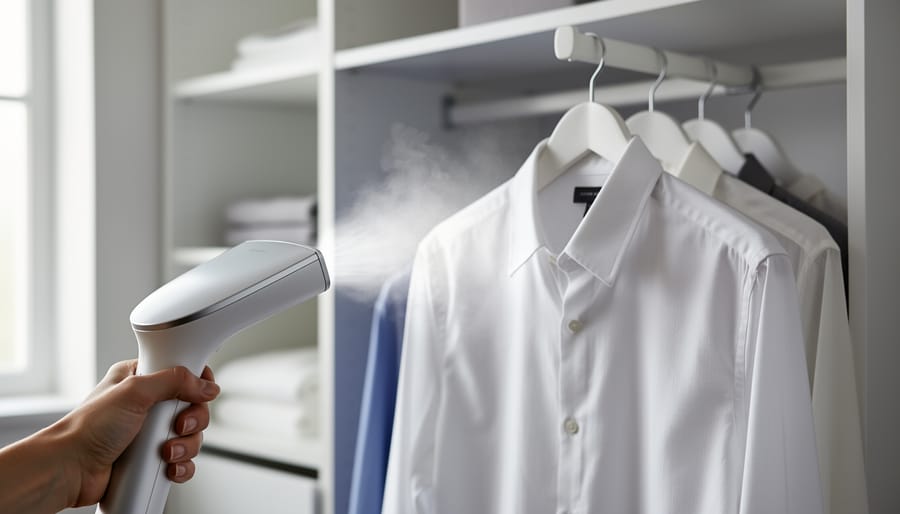
A handheld steamer is the right pick for most households: it heats up in under a minute, fits in a drawer, and handles shirts, blouses, and curtains without a board. If you steam every day or tackle heavy fabrics, a full-size upright model with a bigger water tank will save you refilling and reheating. Everything else, from wattage to hose length, comes down to how often you steam and what you steam.
Steaming isn’t new. Wrinkle-releasing steam has been a tailor’s and theater wardrobe trick for generations, long before compact home units arrived, and the principle hasn’t changed: moist heat relaxes fabric fibers so creases fall out on their own. What has changed is how portable, fast, and affordable the tools have become. That’s also why the options can feel overwhelming. Tank size, heat-up time, steam output, and hose design all sound similar on a spec sheet, yet they shape your daily experience very differently.
This guide breaks down the main types, the specs that deserve your attention, and the mistakes that lead to a steamer sitting unused in a closet.
How a Clothes Steamer Works and When It Beats an Iron
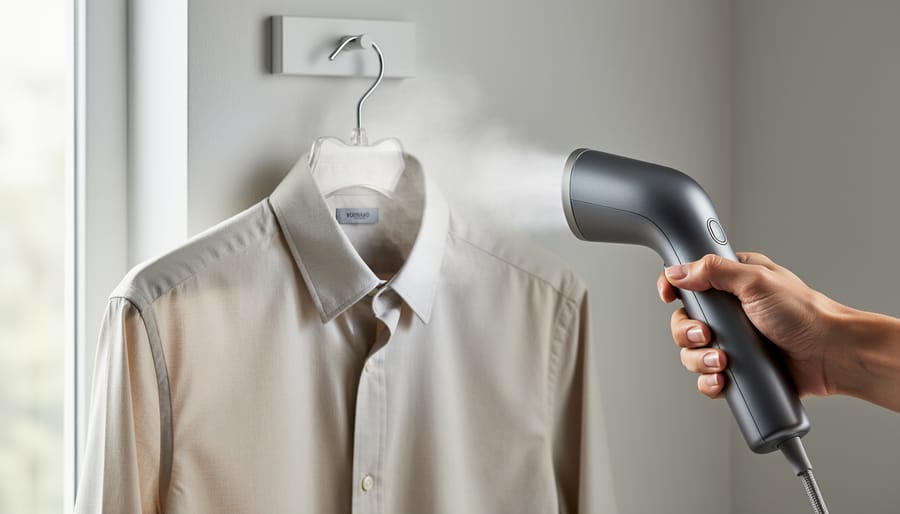
A clothes steamer works on a simple principle: it boils water in a small tank and sends the vapor through a hose and nozzle. When that hot, moist vapor hits fabric, the fibers loosen and relax, so wrinkles drop out under their own weight. No pressure is needed, which is why steaming feels gentler than pressing.
That gentleness matters. A hot iron plate flattens fibers and can leave shine marks on wool, scorch delicate synthetics, or crush velvet. A steamer stays a short distance from the surface, so it suits silk, linen blends, knits, and anything you’d rather not touch with a hot plate.
Steamers handle some jobs better than any iron. They shine at quick wrinkle release, refreshing a jacket between wears, taking creases out of hanging curtains, and freshening upholstery without taking anything down. If you’ve ever compared tools by how many tasks they cover, the same logic applies here, much like in cordless vacuum buying where versatility often decides the winner.
An iron still wins when you want a razor-sharp finish: crisp shirt collars, pressed pleats, and tailored trousers with a clean crease. Pressure plus heat sets those lines in a way vapor alone can’t.
Garment pressing is an old habit. People smoothed cloth with heated stones and later with heavy cast-iron flat irons warmed on a stove. Today’s steamers deliver the same goal, a neat garment, in a fraction of the time.
Handheld, Upright, or Garment-Press: Types of Steamers Compared
Handheld Steamers: Compact and Quick
Handheld steamers earn their place in small homes. They’re light, they store in a drawer or on a closet shelf, and most heat up in under a minute, which makes them ideal for a shirt you’ve just pulled from the dryer. They also pack easily for trips, since many fold or have detachable parts.
The trade-off is capacity. A small tank means steam lasts a limited time before you refill, so a full wardrobe session can feel stop-and-start. Here’s how the three main styles stack up:
| Type | Best for | Typical tank size | Main trade-off |
|---|---|---|---|
| Handheld | Small homes, travel, quick touch-ups | Small (roughly 100-300 ml) | Short steam time per fill |
| Upright | Large wardrobes, daily use | Large (often 1 liter or more) | Bulky and pricier |
| Hybrid | Wrinkles plus crisp finishes | Varies by model | Heavier and more complex |
For occasional use, a handheld usually covers everything you need.
Upright Steamers: Built for Bigger Wardrobes
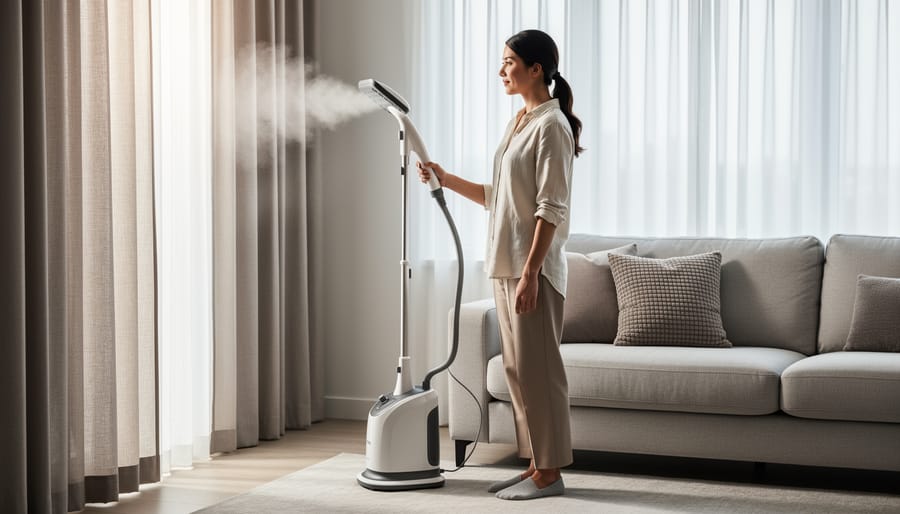
Upright steamers are the workhorses of the category. They pair a floor-standing base with a long hose and a pole that holds a hanger, so you can steam a shirt or dress without ever laying it flat. The big draw is the tank. Many hold a liter or more, which can mean 45 minutes or longer of continuous steam on one fill. That suits households with a week’s worth of work shirts, school uniforms, or a full closet to refresh at once.
The trade-offs are real, though. These units take up floor space, weigh more, and cost noticeably more than handhelds. Before you buy, check where you’d store one and whether you’ll steam often enough to justify the footprint.
Hybrid and Steam-Press Options
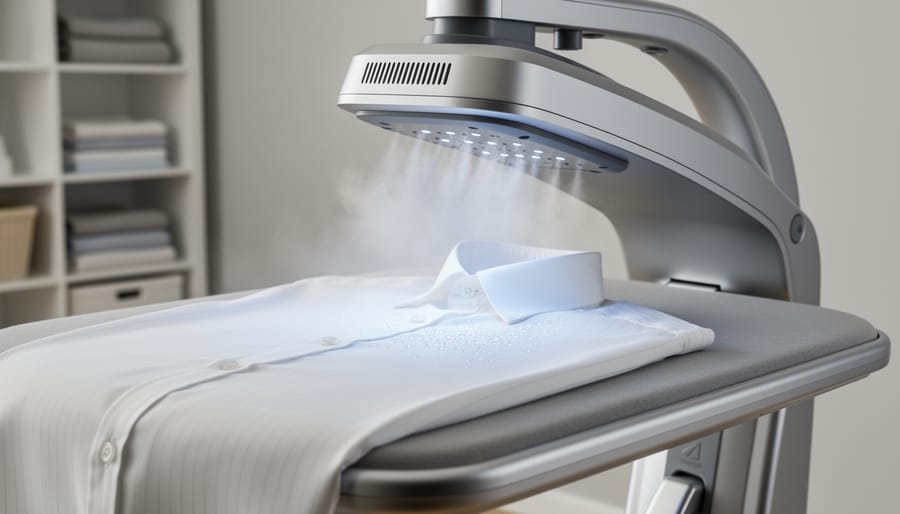
Some people want soft, relaxed fabric and also a sharp crease, and a pure steamer can’t always deliver both. That’s where hybrids come in. Steam-press units and iron-steamer combos pair a heated soleplate or pressing surface with a steam source, so you can lift wrinkles and then press collars, cuffs, and pleats into shape without switching tools.
These models suit anyone who irons dress shirts, tailored trousers, or pleated skirts regularly but doesn’t want to give up steaming’s speed. They’re also handy if you sew or craft and need flat, crisp seams. The tradeoffs are real, though: hybrids tend to be heavier and bulkier than handhelds, and they take up more storage space than a compact steamer.
If you’re still weighing your options, it helps to compare steamer types side by side. Check the soleplate material and steam settings, and confirm current specifications with the manufacturer before buying.
Key Buying Factors: What Actually Matters on the Spec Sheet
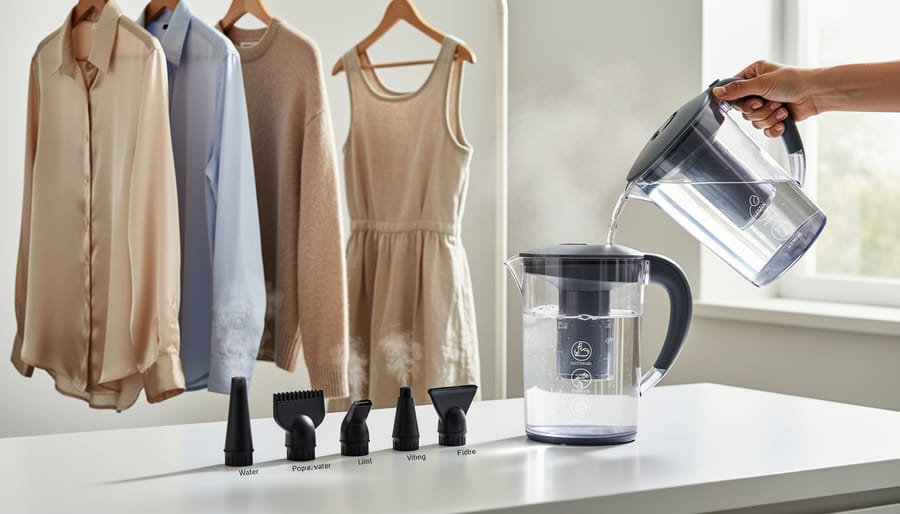
Power, Heat-Up Time, and Steam Output
Wattage is the headline number, but it only tells part of the story. As a rule of thumb, 1,000 to 1,500 watts gives enough power to produce steady steam for everyday fabrics, and higher wattage usually means faster heat-up and more vapor per minute. Still, a poorly designed steam head can waste that power, so treat the figure as a starting point, not a verdict. If you’re comparing options like the best clothes steamer at Target check what the maker says about real steam output, not just watts.
Heat-up time matters more than most shoppers expect. Under a minute is excellent, and up to two minutes is perfectly reasonable. Here’s a quick checklist of what to look for:
- Wattage: aim for at least 1,000 W for dependable, consistent steam.
- Heat-up time: choose models that are ready in about 60 seconds or less.
- Steam consistency: look for steady output without sputtering or dripping water.
- Manufacturer claims: verify run time and output against independent reviews.
Prioritize steady performance over big numbers on the box.
Tank Size, Weight, and Ease of Use
A bigger tank means longer steaming, but it also means a heavier steamer. Many handheld models carry about 200 to 300 ml, which usually gives somewhere between 8 and 15 minutes of steam, enough for a week’s shirts and a pair of trousers. Check the maker’s stated run time rather than assuming, since the same tank can last very different lengths depending on steam output.
Weight matters more than most shoppers expect. A full handheld can tire your wrist halfway through a load, so look for a balanced body and a grip that feels natural when you hold it upright. If you plan to steam sleeves and hems repeatedly, comfort counts as much as capacity.
For upright models, a longer hose, ideally around 1.5 meters or more, lets you move around a garment without dragging the base along. Easy refilling helps too: a wide opening or a removable tank saves you from awkward pouring at the sink.
Safety Features, Attachments, and Fabric Compatibility
A steamer spends most of its life hot, wet, and in the hands of someone in a hurry, so safety features deserve real attention. Auto shut-off is the big one: it cuts power when the tank runs dry or the unit sits idle, which protects both the heating element and your countertop. Spill protection, such as a sealed tank cap or a leak-resistant design, matters more with handhelds, which tend to get tipped, tucked into bags, or set down at odd angles.
Attachments are where fabric care gets practical. A brush head lifts the pile on wool and heavy cottons, while a fabric guard or cloth shield keeps direct heat off delicate silk and prevents water spotting. Linen relaxes beautifully with steady, close passes of steam, but silk calls for distance and a light touch.
Always check the garment’s care label first, and test on a hidden seam before steaming anything fragile.
Matching a Steamer to Your Home, Wardrobe, and Budget
Best Fit for Small Spaces and Occasional Use
A lightweight handheld is usually all you need if you live in an apartment or only steam a few garments a week. These models store in a drawer or on a closet shelf, heat up in under a minute, and handle shirts, blouses, and dresses without any setup. Look for a tank of roughly 200 to 300 ml and around 1,000 watts or more, which gives you enough steam to finish an outfit or two before a refill.
Weight matters more than most shoppers expect. A steamer you can hold comfortably at arm’s length gets used, while a heavy one ends up forgotten in a cupboard. A hose long enough to reach a hanging garment also helps.
If your needs grow, an upright can always come later.
Best Fit for Busy Households and Large Wardrobes
If your household runs several loads of laundry a week, an upright steamer starts to make real sense. The big advantage is tank capacity. Many uprights hold well over a liter of water, which can mean 45 minutes or more of steam on a single fill, enough to work through a week’s worth of shirts, dresses, and school uniforms without stopping to refill.
Stability matters too. The base sits on the floor, so you aren’t holding the weight in your hand, and a hanger-and-pole setup keeps garments taut while you work. That’s a real relief for tired wrists.
The trade-offs are storage space and a higher price. Check the heat-up time, the hose length, and the warranty before you buy. If you steam most days, the extra footprint usually pays for itself in saved time.
Best Fit for Curtains, Upholstery, and Travel
Curtains and upholstery reward a steamer with a long hose, a wide steam head, and a tank big enough to cover a full panel without a mid-job refill. Look for a model that can work vertically while you stand back, since hanging drapes are awkward to steam at close range. A brush or fabric attachment helps lift pile on velvet and heavy weaves, but test any fabric on a hidden spot first.
For travel, weight and speed matter most. A compact handheld that heats in under a minute and folds or stows easily will earn its place in a suitcase. Check the voltage rating before you fly. Dual-voltage units, usually marked 110-240V, work abroad with only a plug adapter, while single-voltage models need a converter and can be damaged without one.
Common Mistakes to Avoid When Buying and Using a Steamer
Most buying regrets come down to a few avoidable slips, and the first is judging a steamer by wattage alone. Power matters, but it says little about how steadily the unit delivers steam. A 1,500-watt model with a tiny tank can still sputter out before you finish a shirt, so read wattage alongside tank capacity and listed run time, and treat headline numbers with some skepticism.
Tank size is the next trap. A compact reservoir is fine for a quick touch-up, but it becomes a nuisance if you’re steaming a week’s worth of laundry or a pair of lined drapes. Match the tank to your real habits, not your best intentions.
Water is where many people quietly shorten their steamer’s life. In hard-water areas, mineral scale builds up and can cause spitting, weak output, or clogs. Check the manual for the recommended water type, and descale on the schedule it suggests.
Technique matters too. Holding the nozzle tight against silk or delicate wool can leave water spots or even scorch the fibers. Keep a little distance, move steadily, and use the fabric guard where one is included.
Finally, don’t skip the warranty and return policy. A generous return window lets you confirm that the steam output and weight suit you in practice. Once it’s home, let the unit heat fully before you start, steam from top to bottom, and empty the tank after each use so it stays fresh.
Clothes Steamer FAQs
Can a steamer replace an iron?
For everyday wrinkles, yes. A steamer relaxes fibers quickly and handles shirts, dresses, and drapes with ease, but an iron still wins for razor-sharp collars and pleats.
Can I use tap water?
Many manufacturers allow it, but hard water leaves scale that clogs the nozzle over time. Check your manual first, and consider distilled or filtered water if you live in a hard-water area.
Are steamers safe on silk and wool?
Generally, yes, and they’re often gentler than pressing. Hold the head a few inches away, use a fabric guard if one is included, and test a hidden spot on delicate pieces.
How often should I descale?
Follow the schedule in your manual, since it varies by model and water hardness. As a rule of thumb, descale more often if you use tap water or notice weaker steam.
Two quick answers didn’t fit above. A tank usually lasts anywhere from about ten to forty-five minutes, depending on its size and the steam setting, so match capacity to how much you steam in one go. And yes, steaming a garment on a hanger is the standard method: it lets the fabric hang freely so the vapor can release wrinkles without you fighting gravity.
Still weighing your options? These buying guide tips show how to approach any appliance purchase with confidence, and if you like seeing products put through their paces, you can read model reviews to see how we test and compare. Whatever you choose, double-check current specs and return policies before you buy.
Choosing a clothes steamer comes down to matching a tool to the way you actually live. For most households, a handheld model with a 200-300 ml tank and 1,000+ watts handles daily touch-ups without taking over a closet. If you steam big loads or care for a large wardrobe, an upright model earns its floor space. Hybrids make sense when you still want a crisp collar or a sharp pleat.
Before you buy, check the details that matter: tank size, heat-up time, hose length, safety shut-off, and your local water hardness. Current prices and specifications change often, so confirm them with the manufacturer and read the warranty and return policy.
Garment care has come a long way from heavy flat irons heated on a stove, yet the goal hasn’t changed. We want clothes and home textiles that look cared for with little fuss. Pick sensibly, and your steamer will make that easier for years to come.
