
How to Choose the Right Microwave: A Complete Buying Guide for 2026
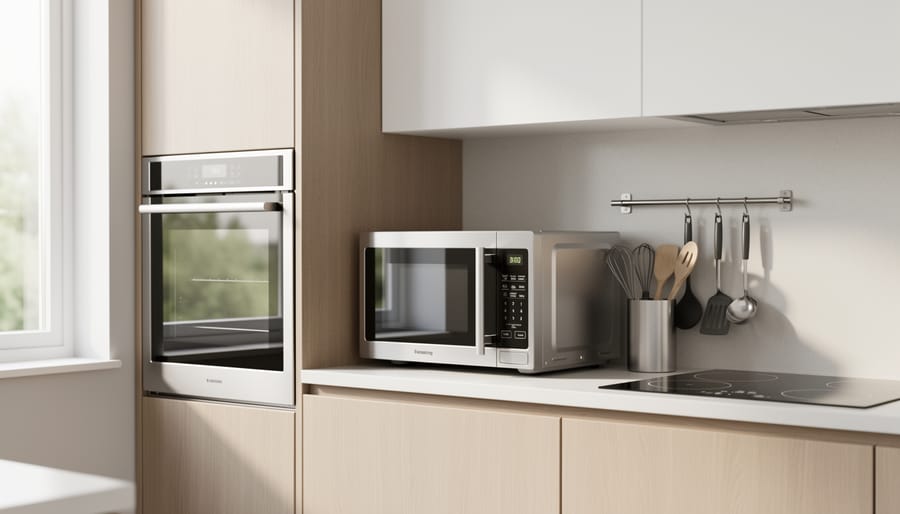
Choosing the right microwave comes down to three decisions: selecting between countertop, over-the-range, or built-in models; matching capacity to your household size (typically 0.7 to 2.2 cubic feet); and ensuring adequate power (at least 800 watts for efficient cooking). With microwave technology evolving steadily since we began covering kitchen appliances in the 1920s, today’s 2026 models offer features like sensor cooking, inverter technology, and smart connectivity that genuinely improve cooking results rather than just adding complexity.
The challenge most homeowners face is cutting through marketing claims to identify which features actually matter for daily use. A basic countertop model can perform brilliantly for reheating and defrosting, while convection microwaves and models with advanced sensors justify their higher prices only if you’ll use those capabilities regularly. Understanding the practical differences between wattage levels, turntable versus flatbed designs, and control interfaces helps you avoid both overspending on unused features and buying an underpowered appliance that frustrates you for years.
This guide walks you through every factor that influences microwave performance and satisfaction, from installation requirements to the hidden costs of different microwave types. You’ll learn which specifications translate to real cooking improvements and which represent pure upselling, backed by our decades of testing kitchen appliances and tracking which features homeowners actually value long-term.
Understanding Microwave Types: Which One Fits Your Kitchen?
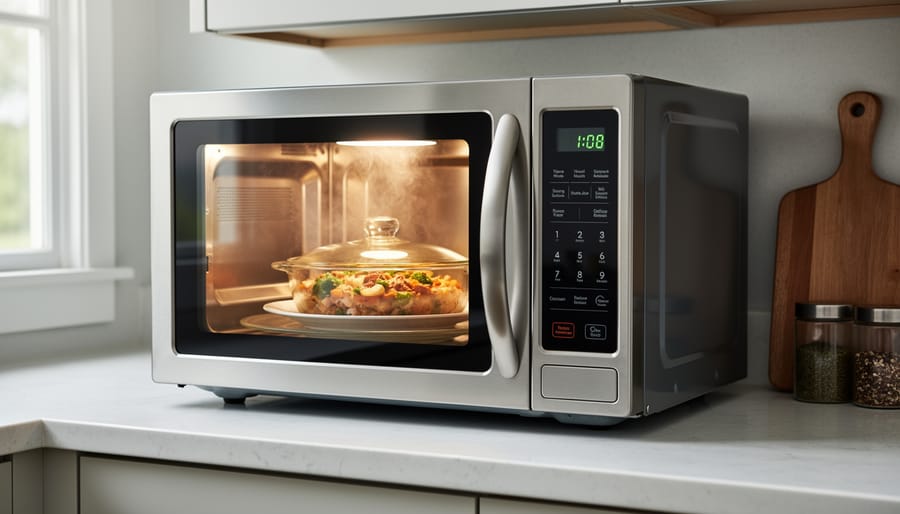
Choosing the right microwave starts with understanding the four main types, each designed for different kitchen layouts and cooking needs.
Countertop microwaves are the most popular and flexible option. They sit on your counter or a shelf, plug into any standard outlet, and require zero installation. This portability makes them ideal for renters, dorm rooms, or anyone who wants a no-commitment appliance. The trade-off? They consume valuable counter real estate. If you have limited workspace, that footprint matters. Prices range from $60 for basic models to $400 for high-end options with inverter technology. Most measure 17-24 inches wide and need a few inches of clearance on all sides for ventilation.
Over-the-range (OTR) microwaves mount above your cooktop, combining a microwave with a range hood. This dual function saves counter space while providing ventilation for your stove. They work best in kitchens where floor space is at a premium but you have cabinet space above the range. Installation requires electrical work and proper venting, either ducted to the outside or recirculated through charcoal filters. Expect to pay $200-$600, plus installation costs if you hire a professional. Standard OTR units are 30 inches wide to match typical range widths, though 24-inch models exist for smaller stoves.
Built-in microwaves integrate seamlessly into cabinetry, creating a sleek, custom look that elevates kitchen aesthetics. They’re trimmed to sit flush with surrounding cabinets, offering the most polished appearance. This premium positioning comes with premium prices: $400-$2,000, depending on brand and features. You’ll also need a trim kit (often sold separately) and professional installation to ensure proper fit and ventilation. Built-ins shine in upscale kitchen renovations where consistent design matters, but they’re overkill if you’re simply replacing a broken microwave.
Drawer microwaves slide out like a cabinet drawer, typically installed below the counter or in an island. This placement puts controls at an accessible height and keeps the microwave out of sight when not in use. Families with young children appreciate the lower height for supervised use, while those with mobility concerns find bending to counter height easier than reaching overhead. The biggest drawback? Cost. Quality drawer models start around $1,000 and climb to $1,500 or more, making them the priciest category.
| Type | Best For | Space Needed | Price Range | Installation |
|---|---|---|---|---|
| Countertop | Renters, flexible placement, budget-conscious | Counter space, 2-3 inches clearance | $60-$400 | Plug and use |
| Over-the-Range | Small kitchens, dual-function needs | Above cooktop, 30″ width typical | $200-$600 | Moderate to complex |
| Built-In | Custom kitchens, seamless design | Cabinet cutout with trim | $400-$2,000 | Professional recommended |
| Drawer | Accessible placement, hidden storage | Below-counter or island | $1,000-$1,500+ | Professional required |
Your kitchen layout dictates which type makes practical sense, but don’t ignore how it fits your cooking patterns. If you reheat coffee and leftovers, a basic countertop model suffices. If you’re ventilating a gas range anyway, an OTR unit kills two birds. And if you’re gutting the kitchen for a full remodel, built-in or drawer options deliver that finished, intentional look that makes the space feel complete rather than cobbled together.
Essential Features That Matter Most
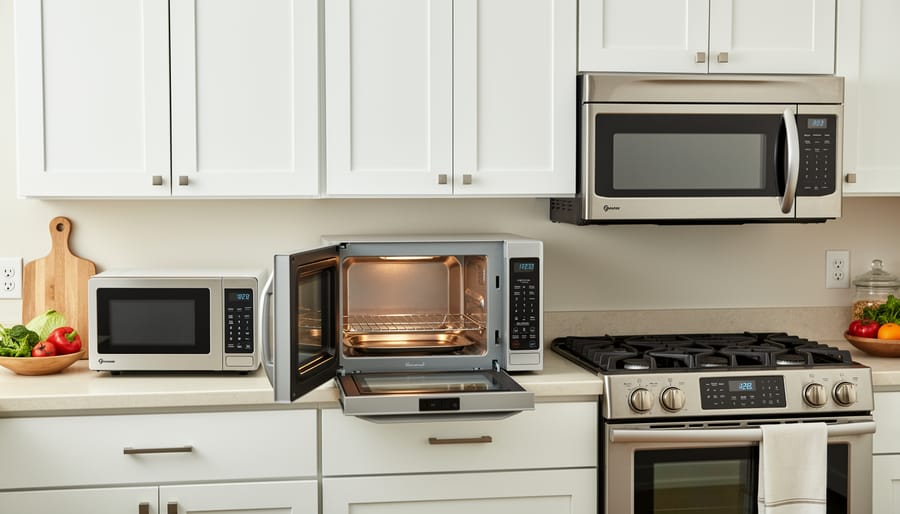
Power and Capacity: Finding the Right Balance
Wattage directly affects how quickly and evenly your microwave cooks food. For most households, 900 to 1,000 watts strikes the sweet spot between performance and energy efficiency. Models below 700 watts struggle with basic tasks like reheating leftovers or cooking frozen meals within reasonable timeframes. If you primarily reheat beverages and snacks, 700 to 800 watts suffices, but serious cooks who regularly prepare microwave meals or defrost large cuts of meat should target 1,000 to 1,200 watts for consistent results.
Capacity matters just as much as power. A single person or couple can manage comfortably with 0.7 to 1.0 cubic feet, which accommodates standard dinner plates and medium-sized bowls. Families of three or four benefit from 1.2 to 1.6 cubic feet, allowing room for casserole dishes and large platters. Households that frequently cook for groups or prefer batch cooking should consider 1.8 to 2.2 cubic feet, though these larger models demand significantly more counter or cabinet space.
The relationship between power and capacity isn’t always straightforward. A high-wattage microwave with small capacity wastes energy on quick tasks, while a spacious low-wattage model heats unevenly and takes frustratingly long. Match both specs to your actual cooking patterns rather than defaulting to maximum size or power. Consider what dishes you cook most often and measure your typical containers to ensure they’ll rotate freely on the turntable, leaving at least an inch of clearance on all sides for proper heat circulation.
Smart Controls and Convenience Features
Modern microwaves offer control panels ranging from simple dial-and-button layouts to sleek touchscreens with WiFi connectivity. The right interface depends on who’s using it: touchpads suit tech-comfortable households, while physical dials and clearly labeled buttons work better for older family members or those who prefer tactile feedback. Most mid-range models in 2026 include preset functions for popcorn, beverages, and common frozen foods, though these work more reliably when paired with sensor cooking technology that automatically adjusts time based on steam and humidity levels rather than guessing.
Sensor cooking represents the biggest practical upgrade from basic models. Instead of manually setting two minutes and hoping your leftovers heat evenly, sensors detect when food reaches the right temperature and stop automatically. This prevents the cold center, scalding edges problem that plagues manual reheating. For families reheating varied portions daily, it’s worth the modest price increase.
- Must-have: One-touch start, child lock, mute option for late-night use
- Must-have: At least three power levels and sensor reheat
- Nice-to-have: Smart connectivity for voice control or remote monitoring
- Nice-to-have: Keep-warm function and delay start timers
Smart connectivity lets you start cooking from your phone or integrate with voice assistants, but it’s genuinely useful mainly for households already invested in smart home ecosystems. Unlike smart kitchen lighting or decorative lighting you control frequently, you won’t adjust microwave settings remotely often enough to justify paying extra unless the model already fits your needs otherwise. Focus first on the core controls you’ll use daily.
Inverter vs. Traditional Technology
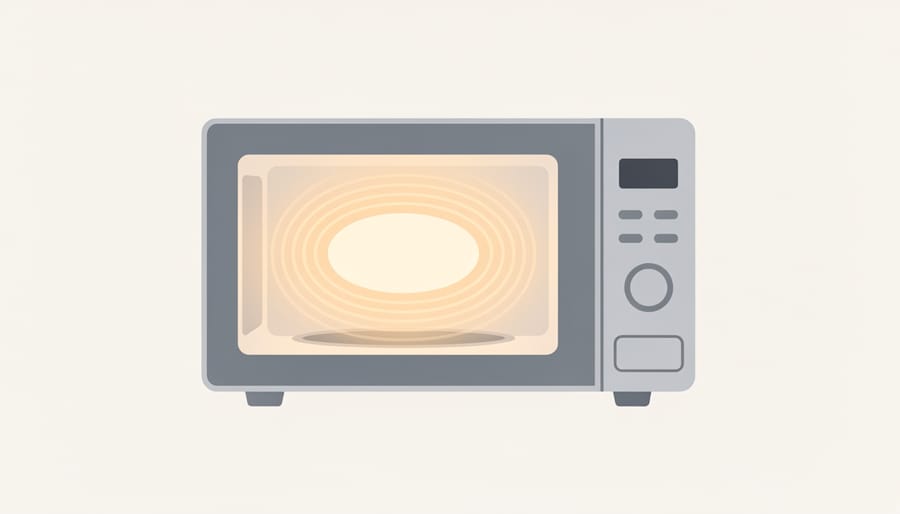
Traditional microwaves cycle magnetron power on and off at full intensity to simulate lower power levels. Select 50% power, and the magnetron runs at 100% for half the cooking time, then shuts off. This creates uneven heating and hot spots.
Inverter microwaves deliver consistent power at the selected level. Choose 50% power, and you get a steady 50% energy output throughout. The result: more uniform heating, gentler defrosting without cooked edges, and better texture in delicate foods like fish or reheated rice.
The technology costs more upfront, inverter models typically add $50-150 to the price. For households that frequently defrost meat, reheat leftovers, or cook temperature-sensitive dishes, that investment pays off in better results. If you mainly reheat coffee and pop popcorn, a traditional magnetron works fine and saves money.
Matching Microwave Size to Your Kitchen Space
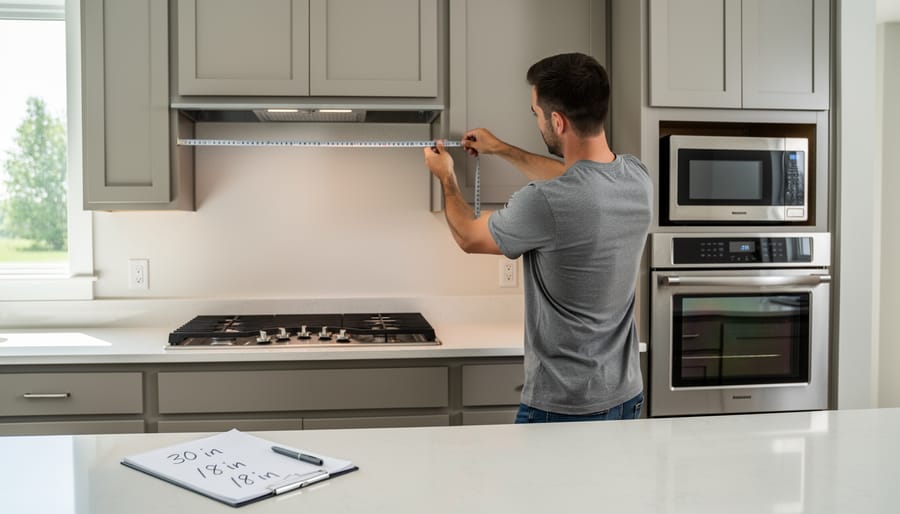
Before you purchase any microwave, pull out your tape measure and get precise dimensions of the space you’re planning to fill. Measure the width, height, and depth of countertops, cabinet openings, or wall areas where the microwave will live. Write these measurements down and bring them when you shop, or keep them handy when browsing online, because a beautiful microwave that doesn’t fit becomes an expensive mistake.
For countertop models, remember that you need space not just for the unit itself but also for the door to swing open fully. Most manufacturers recommend at least 3 inches of clearance on the sides and top for ventilation, plus enough room in front so you can comfortably access the controls and interior. If you’re working with limited counter real estate, measure your available space first, then subtract those clearance requirements to find your maximum microwave footprint.
Over-the-range installations demand extra attention to ventilation paths. These units need clear ductwork routes for external venting, or sufficient space for recirculating vents if ducting isn’t possible. Verify that your range hood opening matches standard 30-inch widths, and check that the mounting height leaves adequate space between your cooktop and the microwave bottom, typically 18 to 20 inches for safety.
Built-in and drawer microwaves require precise cabinet opening dimensions and proper electrical placement before installation. These aren’t flexible, the opening must match manufacturer specifications exactly. When coordinating finishes with your existing appliances and cabinetry, consider not just color but also handle styles and control panel placement for cabinet coordination. Stainless steel finishes vary between manufacturers, so a “stainless” microwave might not match your “stainless” refrigerator. If visual harmony matters in your kitchen, request finish samples or check floor models in person before committing to a purchase.
Our Top Microwave Recommendations for Different Needs
When you’re ready to narrow down your search, these recommendations span the spectrum from compact solutions to high-performance models. Each category targets a specific need, helping you match features to your actual cooking habits rather than getting distracted by bells and whistles you won’t use.
Best for Small Spaces: Compact Countertop Models
For apartments, dorms, or tight kitchens, look for 0.7 to 0.9 cubic foot models with 700-800 watts. These fit on narrow counters without sacrificing essential functions. The Panasonic NN-SN65K stands out with inverter technology in a footprint under 20 inches wide, delivering even heating despite its size. Its turntable-free design maximizes usable interior space, letting you fit a full dinner plate corner to corner.
Best for Families: Mid-Size Workhorses
Households cooking for three to five people need 1.2 to 1.6 cubic feet and at least 1000 watts. The GE JES1657 hits this sweet spot with sensor reheat that actually works, preset buttons for common foods, and a child lock. At around $200, it handles everything from weeknight leftovers to batch popcorn without complaint. Its stainless finish coordinates with most modern kitchen appliances.
Best for Serious Cooks: Convection Hybrid
If you regularly use advanced techniques, invest in a convection microwave combining microwave speed with true browning capability. The Breville BMO870 offers both modes independently or combined, letting you crisp pizza, roast vegetables, or bake small batches. Its 1100-watt microwave and 1800-watt convection element work in a 1.2 cubic foot cavity, though you’ll pay $400-plus for this versatility.
Best Budget Option: Reliable Basics
The Toshiba EM925A delivers 900 watts and 0.9 cubic feet for under $100. You won’t get sensor cooking or inverter tech, but preset functions, express cook buttons, and a mute option cover daily needs. It’s especially smart for renters or second kitchens where you need dependable performance without long-term commitment.
Best Premium Choice: Over-the-Range Powerhouse
For those upgrading both microwave and ventilation, the Café CVM9215 combines 1000-watt cooking with 400 CFM exhaust, integrated LED lighting, and WiFi connectivity. Its 2.1 cubic foot interior handles large casserole dishes, while smart controls let you monitor cooking from your phone. Customizable hardware finishes help it blend with high-end kitchen design trends. Expect to budget $700-900 plus installation.
When choosing among these categories, honest assessment of your cooking frequency matters more than feature count. A family reheating meals twice daily benefits more from sensor technology and capacity than someone making occasional popcorn, regardless of budget.
Common Microwave Buying Mistakes to Avoid
Shopping for a microwave seems straightforward until you bring one home and realize it doesn’t fit, lacks the power you need, or sits unused because it’s more complicated than necessary. Here are the most common mistakes buyers make and how to sidestep them.
Misjudging Space Requirements
Many shoppers measure the countertop or cabinet opening but forget to account for ventilation clearance. Microwaves need breathing room on the sides, top, and back to prevent overheating. Check the manufacturer’s specifications for required clearances, typically 3-5 inches on ventilated sides. For over-the-range microwaves, confirm the exact dimensions against your range hood opening before purchasing.
Ignoring Power When Prioritizing Size
A spacious 2.0 cubic foot microwave with only 700 watts will heat slowly and unevenly, frustrating you every time you use it. Conversely, a compact model with 1,000+ watts delivers faster, more consistent results. Prioritize wattage over capacity unless you regularly heat large dishes. For most households, 900-1,100 watts provides the sweet spot between performance and energy efficiency.
Overbuying Features You Won’t Use
Convection cooking, extensive preset menus, and smart connectivity sound appealing in the showroom but often go unused. Be honest about your cooking habits. If you primarily reheat leftovers and make popcorn, you don’t need a $400 model with 20 auto-cook programs. Save money by focusing on essentials: adequate power, sensor cooking for automatic adjustments, and a simple control interface you’ll actually understand.
Neglecting Ventilation Planning for OTR Models
Over-the-range microwaves require either external ducting or recirculating ventilation. Many buyers assume their kitchen supports ducted ventilation when it doesn’t, forcing them into less effective recirculating mode. Before purchasing an OTR model, verify your kitchen’s ventilation setup and whether running ductwork is feasible and affordable.
Choosing Style Over Reliability
That sleek European brand might look stunning, but if replacement parts are scarce or customer service is poor, you’ll regret the choice when something breaks. Research brand reliability, warranty terms, and service availability. Established brands with strong track records typically offer better long-term value than trendy newcomers, especially for built-in installations where replacement is costly and complex.
Main Options Compared
Choosing between microwave types ultimately comes down to weighing performance, installation complexity, and cost. Countertop models ($50, $300) offer the easiest setup and greatest flexibility, requiring only counter space and a standard outlet. They’re ideal for renters or anyone who might relocate their microwave. Over-the-range units ($200, $600) free up counter space and provide ventilation, but demand professional installation and compatibility with existing cabinetry. Built-in microwaves ($400, $2,000) deliver a seamless, custom look that elevates kitchen design, though they require cabinet modification and permanent placement. Drawer-style models ($1,000, $1,500) provide ergonomic access and high-end aesthetics but come with the steepest price tag.
Beyond type, inverter technology consistently outperforms traditional magnetrons for even heating and precise defrosting, adding $50, $100 to the price. Convection capability transforms a microwave into a secondary oven, worth the $100, $200 premium if you bake frequently. Smart features and sensor cooking add convenience but require regular maintenance tips to keep sensors functioning properly. Match your choice to how you actually cook rather than aspirational features you might never use.
Frequently Asked Questions
How long should a microwave last?
A quality microwave typically lasts 7-10 years with regular use. Higher-end models with inverter technology and solid construction often reach or exceed this range, while budget countertop units may need replacement after 5-6 years.
Are microwaves safe to use every day?
Yes, modern microwaves are completely safe for daily use when operated properly. The radiation they emit is non-ionizing and contained within the unit, posing no health risk as long as the door seal remains intact and you avoid running the microwave empty.
How much electricity does a microwave actually use?
Microwaves are surprisingly energy-efficient, using only 0.12-0.20 kWh per 15 minutes of cooking time. They consume far less energy than conventional ovens for reheating and many cooking tasks, making them one of the most economical kitchen appliances.
What’s the best way to clean and maintain a microwave?
Steam-clean your microwave weekly by heating a bowl of water with lemon slices for 3-5 minutes, then wiping down surfaces. This method allows for easy cleanup without harsh chemicals and prevents buildup that can reduce efficiency.
Are expensive microwaves worth the investment?
Premium microwaves justify their cost if you use advanced features like convection cooking, precise sensor technology, or inverter heating regularly. For basic reheating and defrosting, a mid-range model often delivers the same performance without the extra price tag.
Beyond these common questions, remember that your specific cooking habits should guide your budget decision. A microwave you use multiple times daily warrants a higher investment than one reserved for occasional reheating.
